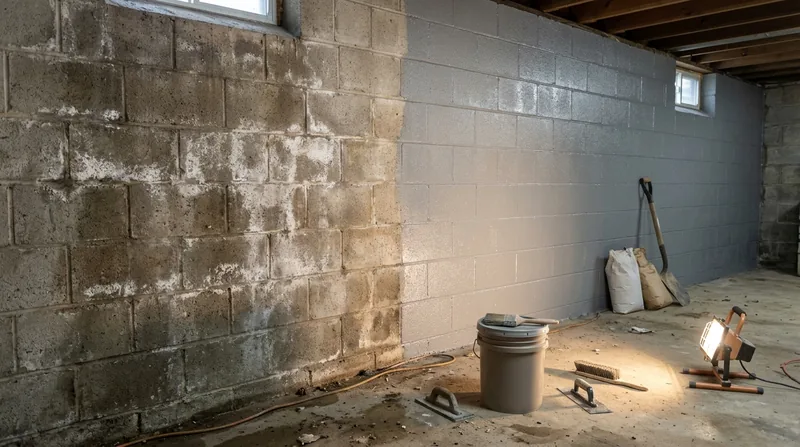




Most of Cordova was built between the 1960s and the 1990s, and the brick ranches and two-story homes that line streets like Dexter and Houston Levee sit on slab-on-grade foundations. Full basements are the exception here, appearing mainly in the 1970s and 1980s split-levels in the older subdivisions. That matters because Basement Wall Sealing in Cordova is rarely a wall finish decision; it is usually the last step after we stop the water that makes the lower wall damp in the first place. The soil is windblown silt over clay, which holds storm water and swells and shrinks through the seasons, so foundation walls crack at the corners and along the slab edge. When a wall reads damp, chalky, or musty, we find the source before we touch a sealer. Start with a free basement inspection and we will tell you plainly whether sealing is the right answer.
Why Damp Walls Keep Coming Back in Cordova's Silt-over-Clay Soil
Cordova gets heavy summer thunderstorms and steady winter rain, and the flat lots push runoff toward the house instead of away from it. The silt layer soaks up water fast, then the clay underneath slows it down, so the water table rises against the foundation and pushes moisture through pores and hairline cracks. That is hydrostatic pressure, and it is the reason a sealer applied to a wet wall fails within a season. We see it most on the north and west walls of older split-levels, where shade keeps the block damp longer after a storm.
- Efflorescence, the white chalky bloom, tells you water is moving through the wall and leaving mineral salts behind.
- Hairline cracks at the corners and along the slab edge open and close with the seasonal swell and shrink of the clay.
- Downspouts that dump next to the foundation recharge the soil right at the wall.
- Window wells in split-levels collect runoff and seep at the sill.
- Musty smells in a finished lower room usually mean moisture is trapped behind the wall finish.
Sealing alone will not hold back a rising water table, and we say so before we sell a sealer.
Key info: On a 1980s split-level off Macon Road, the wall looked damp only after storms, and the homeowner had already paid for two sealer coats. The real issue was a clogged footing drain and a failed sump pump, not the block itself. We cleared the drain, replaced the pump, and only then sealed the wall.
For the rules on structural and drainage work, start with the Shelby County government site and confirm with the local building department, because requirements vary by jurisdiction.
How We Seal a Cordova Basement Wall, Step by Step
We do not sell sealer as a cure-all. The first job is diagnosis: we check grading, downspout discharge, window wells, the sump basin, and the wall itself for efflorescence and active seepage. If the water is under hydrostatic pressure, we recommend an interior drain tile system or exterior work first, then seal. If the wall is merely damp, sealing is the honest fix.
- We walk the exterior and check that the soil slopes away and that downspouts discharge at least six feet from the wall.
- We inspect the sump basin, pump, check valve, and discharge line for failure or short cycling.
- We remove efflorescence and loose parging, then patch cracks and honeycombed mortar before any sealer goes on.
- We let the wall dry to a workable moisture level, because a sealer over a wet wall traps water and peels.
- We apply a penetrating sealer for damp masonry or a membrane sealer where the wall needs a continuous barrier.
- We test with a moisture meter and give you a written note on what we found and what we did.
If the diagnosis points to a crack rather than damp masonry, we route the job to foundation crack repair instead.
Key info: In a two-story near Germantown Parkway, the lower wall was dry except for a two-foot band above the slab. That pattern pointed to splash and runoff, not a high water table. We extended the downspouts, regraded the bed, and sealed the band. A full drain system would have been overkill, and we told the homeowner so.
Sealing Approaches We Use on Cordova Walls
Not every wall takes the same product. We match the approach to the wall material and to what the moisture reading tells us, and we explain the trade-offs before we start.
| Approach | Description | Best for |
|---|---|---|
| Penetrating sealer | Soaks into the masonry and blocks capillary moisture without a surface film. | Damp block or poured walls with no active seepage. |
| Membrane sealer | Builds a continuous coating over the wall face. | Walls with fine surface cracks and repeated dampness. |
| Crack injection plus sealer | Epoxy or polyurethane injection closes the crack, then the wall is sealed. | Visible vertical or corner cracks that weep after rain. |
| Drainage first, then seal | Interior perimeter drain and sump relieve pressure before any coating. | Walls wet from hydrostatic pressure, not just humidity. |
Basement Wall Sealing Cost in Cordova: What to Expect
Sealing is one of the lower-cost items in below-grade work, and that is exactly why it gets oversold. A single damp wall with no active seepage typically starts around $1,500, and the figure climbs with wall length, height, and how much prep the surface needs. Efflorescence removal, patching, and drying time all add labor. So does access behind finished walls or stored goods.
The bigger cost driver is what we find underneath. If the wall is wet from hydrostatic pressure, a sealer is money thrown at a symptom, and the honest quote is for drainage first. We give you both numbers so you can see the difference. Getting two or three estimates is smart, and ask each contractor what they would do if the wall were still damp after sealing. Our full pricing overview lays out the ranges.
Choosing a Basement Wall Sealing Contractor Near Me in Cordova
Ask for proof of license and insurance before anyone walks your wall, and ask whether the company specializes in below-grade work or treats sealing as a sideline. A general foundation firm and a plumber both touch this work, but neither is a waterproofing specialist. Get at least two written estimates, and make sure each one states whether drainage is included or excluded.
- Confirm the license and insurance certificate, and ask for it in writing.
- Ask for local references from Cordova or Bartlett jobs within the last year.
- Find out whether a permit is needed for any structural or drainage change, and call the local building department to verify.
- Check HOA rules before exterior grading or discharge changes, since some subdivisions restrict them.
- Get the warranty terms in writing and confirm whether it is transferable.
When you are ready, contact us and we will schedule the inspection.
Basement Wall Sealing in Cordova: Pricing Guide
| Service | Price | Details |
|---|---|---|
| Single damp wall, penetrating sealer | Starting at $1,500 | Includes efflorescence removal, patching, and one wall sealed, with price rising by wall length and height. |
| Multiple walls, membrane sealer | Starting at $2,400 | Covers several walls with surface prep and coating, with cost driven by square footage and access. |
| Crack injection plus wall sealing | Starting at $1,900 | Epoxy or polyurethane injection closes active cracks before sealing, with crack count and length moving the price. |
| Drainage correction before sealing | On estimate | Hydrostatic pressure needs interior drain tile or sump work first, so we quote after an on-site look. |
| Travel | Included | In Cordova and surrounding areas, no separate call-out or mileage fee. |
| Estimate | Free | Response within 24h at (901) 446-2294, no obligation to book. |
Indicative pricing, the exact cost depends on square footage, finish, and site access. Free personalized estimate within 24h at (901) 446-2294.


